When a truck is in the shop unexpectedly, the repair bill is only part of the cost. There can also be missed deliveries, schedule changes, replacement equipment, driver downtime and, ultimately, an impact on your customers.
That’s why preventative maintenance for commercial trucks is about much more than fixing equipment. It’s about protecting uptime, controlling costs and keeping your operation moving.
And as operating costs continue to climb, that matters even more. The American Transportation Research Institute reported that the average cost to operate a truck reached a record $2.336 per mile in 2025, with repair and maintenance costs increasing 8.6% year over year.
“The best maintenance event is the one you can plan for,” says John Sissoyev, Director of Fleet Maintenance at TCI Transportation. “When you stay ahead of service needs, you have more control over when the truck comes into the shop, how long it stays there and how that affects the rest of your operation.”
Preventative vs. Reactive Maintenance: What’s the Difference?
Preventative maintenance is scheduled service designed to identify and address potential problems before they lead to breakdowns. Reactive maintenance happens after something has already failed.
Both have a place in fleet operations, but relying too heavily on reactive repairs creates uncertainty. A planned inspection can be worked into an operating schedule. A roadside breakdown usually cannot.
Preventative fleet maintenance may include:
- Fluid and filter changes
- Brake, tire and lighting inspections
- Engine and drivetrain checks
- Safety and compliance inspections
- Scheduled component replacement
- Maintenance recordkeeping and planning
The goal isn’t simply to service a truck because the calendar says it’s time. A strong maintenance program considers mileage, vehicle use, operating conditions, manufacturer recommendations and the equipment’s history.
How Preventative Maintenance Helps Reduce Truck Downtime
Downtime can’t always be eliminated, but fleets can reduce unexpected downtime by identifying problems earlier and planning service before a small issue becomes a larger one. A strong maintenance strategy is also part of a broader approach to improving fleet efficiency, from vehicle utilization and fuel consumption to maintenance costs and on-time performance.
That requires consistency—and experienced people who know what to look for.
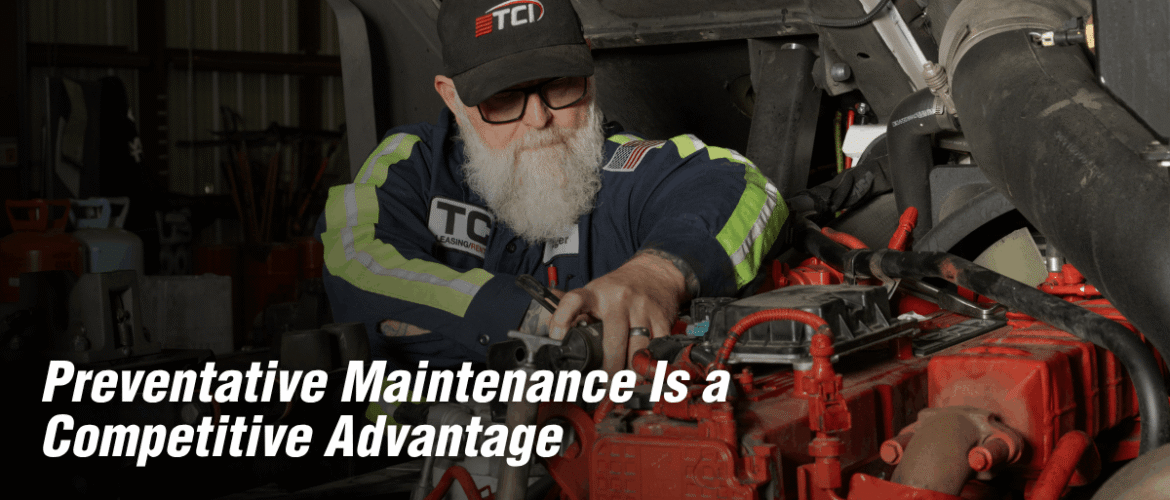
“A good technician isn’t just completing a checklist. They’re looking at the bigger picture: what they’re seeing today, how the equipment is being used, and what could become a problem down the road. That expertise can make the difference between planned service and an unexpected failure,” explains Jocelyn Tapia, one of TCI’s Service Managers.
As trucks incorporate increasingly advanced technology and powertrains, technician training, diagnostic capabilities and predictive maintenance are becoming increasingly important to effective fleet maintenance. Having skilled technicians who can work with evolving vehicle technology helps fleets identify issues sooner, make more informed repair decisions, and keep equipment operating reliably.
Service Done Right: Turning Preventative Maintenance Into a Standard
At TCI, preventative maintenance is also part of a broader service standard: Service Done Right.
The goal is simple—keep customers’ trucks safe, compliant and on the road. That means completing preventative maintenance and repairs on time, communicating clearly when issues arise and following consistent, well-documented processes.
For TCI’s maintenance teams, that standard creates accountability around the details that affect uptime. Preventative maintenance isn’t treated as a box to check; it’s part of an ongoing effort to keep equipment operating safely and reduce unnecessary time in the shop.
“One of the service pillars our technicians live by is Service Done Right. It means completing preventative maintenance on time and doing the job right the first time—so we can identify issues early, keep equipment safe and compliant, and maximize uptime for our customers,” said John Sissoyev, Director of Fleet Maintenance at TCI Transportation.
Maintenance Is Also a Safety and Compliance Strategy
Maintenance and safety go hand in hand. Federal regulations require motor carriers to systematically inspect, repair and maintain commercial vehicles under their control and keep equipment in safe operating condition.
Regular inspections help fleets catch issues involving brakes, tires, lights, steering and other critical components before they become larger safety or compliance concerns.
“Nobody remembers the inspection that went fine. Everyone remembers the one that didn’t happen. We don’t wait for a warning light, funny sound, or strange smell to tell us something is wrong—that’s reactive, not preventative,” says Dannelle Thomas, Director of Safety and Compliance. “In our world, waiting too long can have serious consequences. You trust the truck because it’s always worked. It’s always worked because someone checked it.”
Think Beyond the Next Repair
Preventative maintenance also plays a role in the equipment’s overall lifecycle. Consistent service and maintenance records can help fleets understand equipment performance, plan replacement timing and avoid keeping vehicles beyond the point where reliability starts working against the business.
Maintenance history can also help inform larger equipment decisions. As vehicles age or operating needs change, fleets may need to evaluate whether continuing to own the equipment—or moving toward a lease or rental—is the better fit for their operation.
For some fleets, managing all of that internally makes sense. For others, outsourcing maintenance or choosing a full-service lease can provide access to technicians, maintenance expertise, and service support without requiring the business to build the same infrastructure internally.
TCI’s Full-Service Leasing programs are built around reliable equipment, comprehensive maintenance support, predictable expenses and responsive service.
“Customers aren’t looking for maintenance just for the sake of maintenance. They want reliable equipment and fewer surprises. Our role is to help build a program around their operation so they can spend more time focused on their business,” explained John Sappington, SVP of Sales.
For businesses that own their equipment but want outside maintenance expertise, contract maintenance can provide another path to more predictable fleet performance.
The Bottom Line: Planned Maintenance Protects Performance
Preventative maintenance isn’t simply a shop schedule. Done well, it becomes part of a broader business strategy—helping reduce unexpected downtime, support safety and compliance, extend equipment life and make operating costs more predictable.
The question isn’t only, “When does this truck need service?”
It’s also, “What do we need to do today to keep this truck—and our business—moving tomorrow?”
Fill out the form below to learn more about TCI’s contract maintenance options.
FAQs
Why is preventative maintenance important for commercial trucks?
Preventative maintenance helps identify wear, defects and developing mechanical issues before they cause unexpected breakdowns. A consistent program can improve vehicle uptime, support safety and compliance, extend equipment life and make maintenance expenses more predictable.
How can fleets reduce truck downtime?
Fleets can reduce downtime by following consistent preventative maintenance schedules, performing regular inspections, addressing reported problems quickly, using qualified technicians and reviewing maintenance data to identify recurring issues. Planning service before a failure occurs can also make it easier to schedule maintenance around operational needs.
What does fleet maintenance include?
Fleet maintenance can include oil and filter changes, brake and tire service, fluid checks, lighting and electrical inspections, diagnostics, safety inspections, scheduled component replacements, repairs and maintenance recordkeeping. The exact program should reflect the vehicle, mileage, application and operating conditions.
What is contract maintenance?
Contract maintenance allows a fleet to outsource some or all vehicle maintenance to a service provider under an agreed program. It can help businesses gain access to technicians, maintenance planning and repair support without managing every maintenance function internally.
Does a full-service truck lease include maintenance?
Full-service leases typically combine the vehicle with maintenance and other support services, although coverage varies by provider and agreement. TCI’s Full-Service Leasing solutions include comprehensive contract maintenance support and are designed to help customers improve reliability while creating more predictable operating expenses.