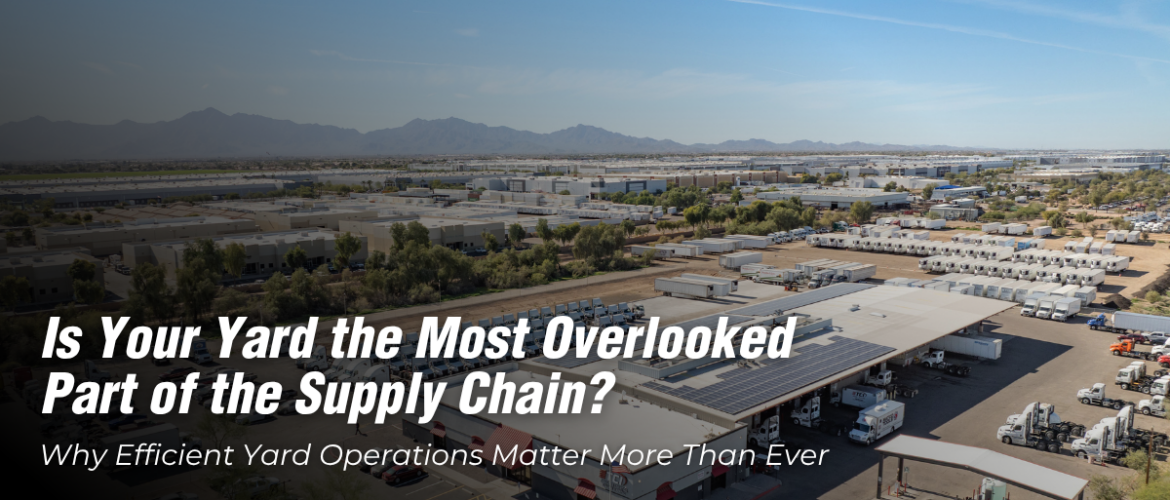
Your yard may only represent a small portion of a facility’s footprint, but it can have a significant impact on operational performance. A congested yard, delayed trailer movements, poor visibility, or inefficient dock scheduling can create bottlenecks that ripple throughout the entire supply chain.
Organizations looking to improve output, increase visibility, and reduce operational inefficiencies are increasingly turning to yard management solutions that provide greater control over trailer visibility, dock activity, and yard performance.
At TCI Transportation, we’ve seen firsthand how optimizing yard operations can unlock significant gains in efficiency, visibility, safety, customer service, and cost reduction.
The Yard: Where Supply Chains Win or Lose
It’s easy to focus on transportation costs or warehouse productivity, but what about everything that happens in between?
Take a moment to think about your operation:
- Are drivers idle waiting for trailer moves?
- Can your team quickly locate every trailer in the yard?
- Is your dock and inventory flowing efficiently, or are trailers sitting idle?
- Are you consistently meeting on-time performance goals?
If any of these questions give you pause, your yard may be creating bottlenecks that impact the rest of your supply chain. Fortunately, these challenges are often addressable with the right yard management strategy.
“The yard is the beating heart of a company’s supply chain,” says Fred Virga, Vice President of Sales, Dedicated Logistics at TCI Transportation. “If things aren’t running smoothly there, the impact reaches every part of the operation. We’ve seen facilities increase output, reduce congestion, and create measurable cost savings simply by improving yard management processes.”
The Hidden Costs of Poor Yard Visibility
Many organizations invest heavily in Transportation Management Systems (TMS) and Warehouse Management Systems (WMS), yet still rely on manual yard checks, spreadsheets, or radio communication to manage trailer movements.
This creates operational blind spots that can lead to:
Lost Productivity: Drivers, yard jockeys, and warehouse personnel spend valuable time locating trailers and coordinating movements.
Increased Dwell Time: Trailers sitting idle create congestion, reduce trailer utilization, and increase detention costs.
Dock Inefficiencies: Without proper trailer sequencing and dock scheduling, warehouse teams can experience delays that impact productivity throughout the facility.
Limited Decision-Making: Without real-time visibility into yard operations, managers are often forced to react to problems instead of preventing them.
The result is a yard that becomes a bottleneck instead of an asset.
What an Optimized Yard Looks Like
A modern yard management strategy goes far beyond trailer spotting.
High-performing yards typically include:
Real-Time Yard Visibility: Knowing where every trailer, asset, and piece of equipment is located at any given time.
Intelligent Dock Scheduling: Reducing congestion by coordinating appointments and maximizing door utilization.
Strategic Trailer Movement: Ensuring trailers are positioned where they need to be before delays occur.
Data-Driven Performance Management:
Tracking key metrics such as:
- Dwell time
- Trailer utilization
- Turnaround time
- Door utilization
- Move completion rates
Safety-First Operations: Reducing risk through structured processes, trained personnel, and improved traffic flow.
When these components work together, the yard itself becomes a competitive advantage.
Many companies choose to partner with experienced providers that offer yard management services to help implement technology, improve processes, and create measurable performance improvements without adding complexity to their operations.
Turning Your Yard Into a Strategic Asset
The reality is that most supply chains don’t have a transportation problem or a warehouse problem. They have a coordination problem.
And more often than not, that coordination challenge starts in the yard.
Organizations that invest in yard management are discovering they can improve operational efficiency, reduce costs, strengthen customer service, and create a more resilient supply chain without expanding their facilities or increasing headcount.
The yard may be one of the most overlooked parts of the supply chain, but for companies focused on long-term growth and operational excellence, it may also represent one of the greatest opportunities.
Partner With TCI Transportation
At TCI Transportation, we help organizations transform their yard operations through customized yard management solutions designed to improve visibility, efficiency, safety, and performance.
Whether you’re looking to reduce congestion, improve trailer utilization, optimize dock scheduling, or support a dedicated logistics operation, our team is ready to help.
Contact TCI today to schedule a complimentary yard assessment and discover what’s possible when your yard operates at its full potential.
Fill out the form below to learn more about how TCI can support your operation with our yard management services.
"*" indicates required fields
FAQs
What is yard management?
Yard management is the process of coordinating trailers, trucks, equipment, and personnel within a facility’s yard to improve efficiency, visibility, and operational performance.
Why is yard management important?
Effective yard management reduces congestion, minimizes delays, improves trailer utilization, enhances safety, and supports overall supply chain performance.
What are common signs of poor yard management?
Common indicators include long driver wait times, trailer congestion, excessive dwell times, lost trailers, missed appointments, and limited operational visibility.
How does yard management improve supply chain efficiency?
By ensuring trailers and equipment are in the right place at the right time, yard management helps warehouses and transportation networks operate more efficiently and consistently.
What industries benefit from yard management services?
Industries including retail, manufacturing, food and beverage, consumer packaged goods, automotive, distribution, and e-commerce can all benefit from optimized yard operations.
What is the difference between yard management and warehouse management?
Warehouse management focuses on inventory and operations inside the facility, while yard management focuses on the movement and coordination of assets outside the facility within the yard.